Research. Document. Iterate. Design.

I partner with businesses to develop strategies for brands to become memorable and help them sell more product.

Build smarter now

I can help with…

01
Driving growth

Create solutions that deliver measurable growth and elevate customer journeys.

02
Consistent branding

Build and maintain brand consistency through strategic systems and governance.

03
Adoptions and buy-in

Champion design's value through strategic, data-backed business communication.

Business challenges

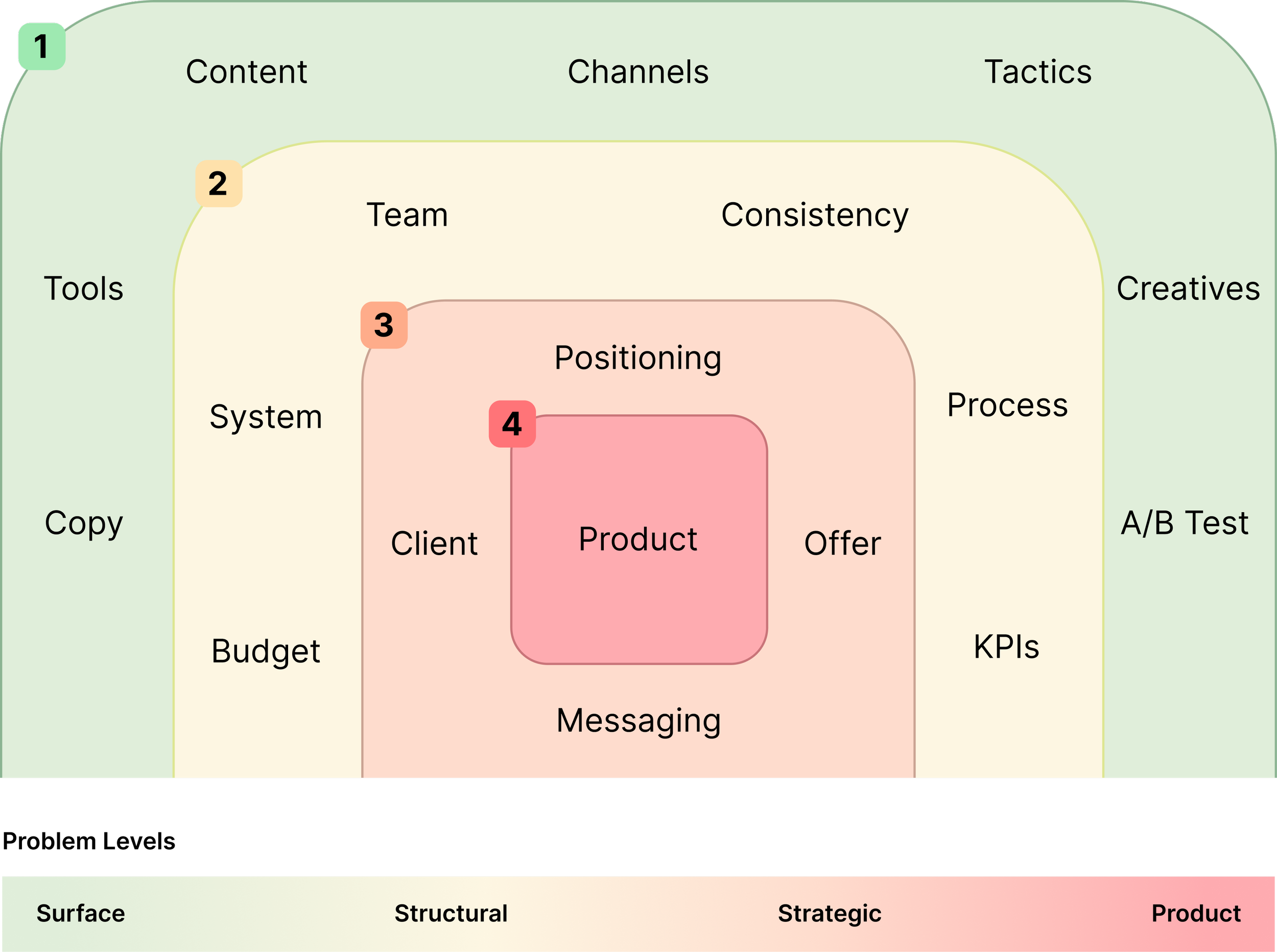
Companies can misdiagnose their issues, blaming tactics, tools, or channels instead of addressing deeper strategic or product flaws. They chase quick fixes, new headlines, agencies, or platforms, without ever defining their audience or clarifying their positioning. True progress starts when product marketing problems are tackled across these four layers. Use can use this visual to prioritize what matters most.

  • People buy outcomes, not products. They invest in a solution to a problem or a desired state, not just an item. The product is simply the tool that delivers this transformation. This is a fundamental mindset shift, customers care more about what a product does for them than what it is.


    Example: A customer doesn't buy a fitness app's workout log feature, they buy the outcome of feeling healthier and more confident. The log is just a tool, the real value lies in the feeling of accomplishment and physical change.

  • A/B testing helps understand how different design elements, such as call-to-action buttons, color schemes, or layouts, impact user behavior. By actively participating in and analyzing the results of these tests, a designer can advocate for changes that are proven to improve key metrics, ensuring their work directly contributes to business goals.

  • Understand how a user interacts with a brand across all touchpoints, from initial awareness to post-purchase engagement. By mapping out the customer journey, it helps identify pain points and opportunities to create more intuitive and compelling experiences. This understanding allows for the creation of targeted design solutions that not only look good but also guide users effectively, leading to higher conversion rates and stronger brand loyalty.

Driving growth

  • Organizing and managing all approved brand assets—logos, icons, illustrations, and photography—in a centralized, accessible location. This prevents teams from using outdated or off-brand visuals. By making it easy for stakeholders to find and use the correct files, this eliminates guesswork and reduces the chance of brand inconsistencies, ensuring every piece of communication looks and feels cohesive.

  • Proactively review all brand touchpoints, from social media profiles and email newsletters to physical signage and product packaging. This regular brand audit helps to catch and correct inconsistencies before they become widespread. By establishing a schedule for these checks and providing constructive feedback to the relevant teams, this strengthens the brand's presence in the market.

  • Creating a comprehensive style guide defines everything from typography and color palettes to logo usage and imagery. This document serves as the single source of truth for the brand's identity. To ensure consistency, the designer should actively share and educate all teams on the guide's importance, conduct regular audits of marketing materials, and create templates for common assets to ensure compliance and efficiency.

Consistent branding

  • Design should facilitate communication between different departments by translating user needs into technical requirements and business goals into design solutions. By proactively identifying and addressing potential misalignments between teams, design can increase project efficiency and ensure that the final product not only meets user needs but also aligns with business and marketing objectives, earning design a seat at the leadership table.

  • Design should not be presented as a service, it should be showcased as a direct contributor to business success. By linking design decisions to key performance indicators (KPIs) like conversion rates, customer lifetime value, or user retention, they can demonstrate a clear return on investment. Design should use data and case studies to show how a design solution solved a specific business problem, making their work indispensable to growth.

  • To secure buy-in from leadership shift the conversation from aesthetics to tangible outcomes. Start by leading with the pain point, highlighting how a current design problem is costing the company money or customers. Instead of just describing your design, show, don't describe, using clear before-and-after visuals, data, or real user quotes to demonstrate its impact. Make your proposed solution feel like a data-backed and inevitable path forward. For a powerful persuasive edge, use competitive fear as fuel by showing how rivals are succeeding with better design, and show what happens if you do nothing. Lastly, make a clear, binary ask that leaves no room for ambiguity, and remember to make them the hero by framing the design win as a smart business move that they enabled.

  • Lead a "Product Teardown" session, that can deconstruct a competitor's brand to show how small design decisions lead to powerful user outcomes. This analysis builds a shared vocabulary and gets teams excited about the potential of their own product. Then, design can reinforce the lesson by presenting their own work. This "show, don't tell" method allows stakeholders to experience the proposed solution firsthand, making its value and impact instantly clear and building a strong consensus for the project.

Adoption and buy-in

Let’s discuss your next project or idea.

Contact me